
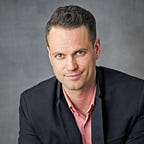


After a long hiatus, The Dr. Madeira Show Podcast is now back on air! This is my first podcast after a 5 year hiatus. I hope you enjoy it! And stay tuned for more episodes coming soon!
The Dr. Madeira Show — Medical Disclaimer
The content on The Dr. Madeira Show is for informational and educational purposes only. Nothing discussed constitutes medical advice, diagnosis, or treatment. Always consult a qualified healthcare provider before making any changes to your health, medications, or medical care. The views expressed are those of the host and guests and do not represent any clinic, business, or medical organization. Do not disregard or delay seeking professional medical advice based on anything you hear on this podcast.
Dr. Madeira Show Podcast Episode 65 Transcript Notes:
Alright, folks, my name’s Dr. Sam Madeira and I’m back. I’ve been taking a long hiatus here from my podcasting time. I podcasted on and off from 2017 to 2021. And now I’m back on the Dr. Madeira show. Good to be back with you all. So it is now mid-2026 and a lot has happened.
A lot has transpired and I’m sure in all of our lives over the last five years that I’ve been taking a hiatus from this work. And I just wanted to not fill you in, just kidding. fill you in a little bit about some of the changes here. So I took a hiatus from clinical practice from the end of 2024 until February of 2026. So I am doing telemedicine with patients in Montana.
And now in Arizona. So I’ve been licensed in Arizona now for at least a month, almost a month and a half, here in the state of Arizona where I am right now. So I am accepting patients via telemedicine in both Montana and Arizona. So if you reside in those states and you’d like to work with me, please reach out. And you can go to Apollohealth Clinic dot com and there’s a phone number there. You can call or text and we’ll get you on the schedule.
Also, there’s some other updates and things throughout the podcasts that I’ll get into as well. But I wanted to get into our topic today, which is that how there’s no room for dogma in medicine. this is something that I started kind of thinking and speaking about in my last year of naturopathic medical school.
at Bastia University in Seattle now well over a decade ago so it’s been a while but I keep coming back to this that if we’re really working for the patient and what’s optimal for the patient, there’s really no room for dogma and medicine. And as a practitioner when I’m looking at working out with patients and getting to know them as a person and what they’re looking for help with, I often think
what is it they need and if that includes things that I have to offer as well as other people, it’s my duty to refer out. so recently I saw a chiropractor on social media basically say how naturotic doctors should not be prescribing peptides and doing hormone replacement therapy. however this chiropractor uses seemingly only extremely forceful
Chiropractic high velocity adjustments, and then has this tribal thing where they do these large gatherings and like chest pump bumps and stuff like that after adjusting people. And these adjustments look pretty intense. I have seen chiropractors on and off since middle school and had all kinds of adjustments, and to me it seemed like one of the more forceful high velocity type of adjustments that I’ve ever seen.
So, it seemed like the pot calling the kettle black in that situation, but we do have a therapeutic order in naturopathic medicine where we do follow with the least forceful and the least invasive things to the most more higher force intervention. So that may look like lifestyle and diet, hydration, nutrition, sunlight, getting outside, walking, exercise.
And then moving up the therapeutic order to nutritional supplements, maybe herbal medicines, and then prescriptions, you know, like thyroid prescription and then maybe eventually hormone replacement therapy like testosterone or biodental hormone replacement therapy if needed, IV nutrient therapy, hyperbaric oxygen therapy, et cetera. So you get the idea.
so we do have a therapeutic order that we follow. You can look that up online, Google therapeutic order, or go to naturopathic.org and or search the American Association of Naturopathic Physicians and you’ll find out more about that therapeutic order. it is listed there. And I believe other people have been talking about this on podcasts recently this year. So pretty, pretty important stuff. So obviously every practitioner has
the right to practice the way that they see necessary and from their specialized training and in the scope of their license as a licensed practitioner in whatever state they are in the US or wherever they are practicing. there’s also I would like to say that, you know, every practitioner has their own biases, myself included. And you know
Pointing out what other people are doing wrong on social media or on a podcast is probably not in the best taste. I’m trying to stay away from that myself right now. I realize that I may not be always coming across that way though. So I just wanted to kind of say that as a caveat. You know, we all have our biases. So I did want to kind of get more into this dogma though, and
One thing that came up when I was thinking about discussing this with you all today is that there’s the law of the instrument and also called the law of the hammer, Maslow’s hammer or the golden hammer is a cognitive bias that involves an over reliance on a familiar tool. So Abraham Maslow wrote in 1966 it is tempting, quote unquote.
It is tempting if the only tool you have is a hammer to treat everything as if it were a nail. Unquote. So that’s Maslow. basically, you know, you may be familiar with his work, Maslow’s hierarchy of needs, stuff like that. a lot of other great work he’s done, check it out. But basically, you know, if you’re a practitioner and you only have one thing that you do.
And let’s say you’re a surgeon or everyone that comes to you, you’re gonna think, okay, well, that’s what needs to be done for them for that condition. And when you’re more of a generalist and you have multiple tools in your toolbox, it’s it’s very prudent to be ethical and think not what is gonna be the greatest moneymaker for my practice or the practice you work at.
Or what is gonna be the thing that maybe would have have the most impact into their nervous system or their their whole body systems, but maybe the the thing that is indicated for that person based on what is going on for them, obviously, right? So it gets even more nuanced in clinical practice. But if you’re patient listening to this or or a pa a person seeking out a
practitioner in the functional medicine, integrated medicine world, and you’ve kind of noticed like everybody’s kind of using similar supplements with you and similar lab tests and you’re not getting well, then it’s time to try something new. Also, if you’re feeling like you’re being gaslit and you’re going to practitioners and they’re not really listening to what your core needs are in that dynamic into that
in that doctor patient relationship or practitioner patient relationship, then it’s it’s on unfortunately the patient in a lot of situations to speak up and advocate for yourself and speak your mind of what you need. So I just thought I would mention that as well. so obviously you know every framework has a different pair of glasses to view complex chronically ill conditions as healthcare practitioners.
And to help our patients reach optimal health. And what works for one patient will not always work for another. So for example, if we’re talking about a SERS patient, a patient who’s been in water damaged buildings, maybe exposed to sewer gas, et cetera, and they try cholesteroline prescription, cholesteroline to bind up the toxins in their body.
and get them out and they get out of the water damaged building that they’re living in, the home they’re living in, and they’re not getting better, maybe they’re getting migraines or constipated. It’s a good idea to be able to have another framework to go by that you’re not gonna go with only one binder. So or one way of binding those things. also some people may not do well with things like sauna therapy or hyperbaric oxygen therapy. So we have to, you know,
see what’s best for our patients and change the framework and the plan accordingly. Seeming seemingly obvious. However, out there I’ve noticed sitting with practitioners as a patient recently over the last couple years, I’ve heard people say like mold isn’t a problem or you don’t need to take binders or you don’t need to do anything about that or mold doesn’t colonize the body. So don’t worry about those things.
And it’s been my clinical and personal experience that those things are are a problem, mold is a problem, and that these people are kind of functioning under these underneath the law of the hammer. And they’re thinking that if they just treat what they treat, everything else will improve, which may work for their patients, but they’re only seeing a small fraction of the human population.
So we do have our biases of the patient panel that we see. And even if you practice for 30, 40 years, you’re probably only gonna see like maybe a couple thousand patients or so. And that’s not fair to the the next patient you see to extrapolate that they’re all kind of gonna respond the same, especially in chronic illness, chronic illness care and the type of
patients that I usually see. So it it’s easy to, you know, get caught up in these frameworks and these philosophies and our kind of way of doing things and and not keep our blinders off and kind of look around and see what how we’re doing things. So, you know, a lot of us suffer from dogma or this bias, this cognitive bias in our practices over time.
And it really can affect how we diagnose and treat our patients. And every patient must be addressed appropriately and individually using the therapeutic order. And that would be my dogma. So sticking to that. And not everyone needs high-force therapies, especially in the beginning or even manual adjustments. and maybe they can improve by doing other things, you know. So
I think that I just kinda wanna mention that and also consider that in conventional medicine where there’s a lot of bias and kind of things are really moving slow over there in a lot of ways and not progressing and especially in certain specialties as fast as they could be, is that it usually takes seventeen or more years for the research in the evidence from there to reach clinical practice. So
it’s easy for these institutionalized dogmas to have you know a real stronghold on the discipline of medicine in in especially the conventional world. So again, I just want to end by saying that hopefully you all are finding practitioners that work for you. one thing that led me back to clinical practice is that
humbly I had patients reach out to me after posting Substack posts and saying, you know, let me know if you ever go back into clinical practice. I’d love to work with you again. I’m just not really finding what I’m looking for out there. So obviously I’m not for everyone, but that was one thing that brought me back into clinical practice. So if you are looking for a practitioner in Arizona or Montana, please do reach out.
And I just want to also close by saying I am on Substack and you probably may be listening to this on Substack. But if you get a chance to, please share my work with other people, share this podcast with friends and family. And I look forward to sharing work podcasts with you in the future. And until next time, take care.
Thank you for listening!
Dr. MadSam


